
How Long Does Invisalign Take to Straighten Teeth ?

The first thing I wanted to know was not how the trays were made, or what the attachments looked like. I wanted one plain answer: how long will this take?
When I started looking into Invisalign, I had one tooth that sat slightly forward, lower teeth that were crowded, and a habit of smiling with my lips closed in photos. My case did not feel dramatic, but it bothered me every day. I thought clear aligners might be a quick fix.
Then I learned the honest answer. Invisalign treatment often takes about 6 to 18 months, but some people finish sooner and some need two years or more. The timeline depends on how much the teeth need to move, how well the aligners fit, and how consistently they are worn.
That sounded vague at first. After going through the process, it made much more sense.
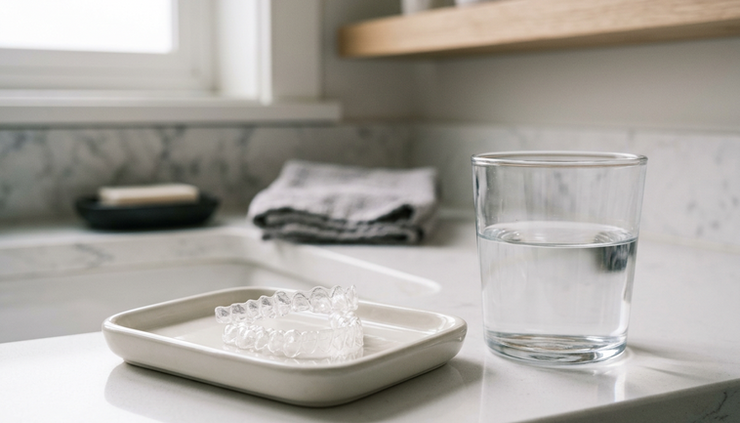
My first estimate was a starting point, not a promise
At my consultation, I expected a fixed number. I imagined the dentist looking at my teeth, checking a chart, and saying something exact like “nine months.”
Instead, I got a range.
My provider explained that my upper teeth would move fairly easily, but my lower teeth had more crowding. That meant the lower arch would likely set the pace. The estimate was close to a year, with a chance of refinement trays afterward.
That word, refinements, mattered. I had not heard it before.
Refinements are extra aligners used near the end of treatment when teeth do not land exactly where planned. They are common. They do not mean treatment failed. Teeth are living tissue, not furniture being pushed across a room. They move at their own pace.
For me, that changed how I thought about the timeline. The first estimate was not a countdown clock. It was a well-informed plan that could shift.
The usual Invisalign timeline
Most Invisalign cases fall into broad time frames.
Type of case | Typical time frame | What it may involve |
Minor spacing or very small shifts | 3 to 6 months | A few front teeth need light movement |
Mild to moderate alignment issues | 6 to 12 months | Crowding, small gaps, mild bite changes |
More involved cases | 12 to 18 months | Several teeth need movement across both arches |
Complex cases | 18 to 24 months or more | Bigger bite corrections or significant crowding |
These are general ranges, not guarantees. A person with small gaps might still need longer if their bite is tricky. A person with visible crowding may move faster than expected if the teeth track well.
The biggest lesson from my own treatment was this: the number of trays does not tell the whole story. If someone has 24 aligners and changes them every week, that sounds like 24 weeks. But that does not include pauses, delayed appointments, rescans, or refinement trays.
What made my treatment feel faster
The first two weeks felt slow because I noticed everything. I noticed the pressure. I noticed taking trays out before coffee. I noticed brushing more often. I noticed the slight lisp that showed up when I said certain words.
Then the routine became ordinary.
What helped most was keeping the trays in for the recommended daily wear time. Invisalign usually works best when aligners are worn 20 to 22 hours a day. That sounds easy until meals, snacks, and hot drinks enter the picture.
I started timing meals without meaning to. Breakfast became shorter. Coffee had to fit into a window. Late-night snacking became less appealing because I did not want to brush again.
The aligners only move teeth when they are in the mouth. That sounds obvious, but it becomes the whole game. Wearing them 16 hours a day may feel close enough, but it can slow progress or cause trays to stop fitting well.

What can make Invisalign take longer
Several things can stretch the timeline. Some are in your control. Some are not.
The most common reasons include:
Not wearing aligners long enough each day
Teeth not tracking with the trays as planned
Losing or damaging aligners
Skipping appointments or delaying scans
Needing refinement trays
Having more complex bite issues
Starting with severe teeth crowding
In my case, one lower tooth was stubborn. It looked small, but it affected the fit of several trays. The aligner still clicked in, but not as cleanly as before. My provider gave me chewies, which are small soft cylinders you bite on to help seat the trays.
That tiny habit made a difference. I used them for a few minutes after switching aligners, especially at night.
It also taught me not to judge progress only by the mirror. Some changes are subtle. The treatment plan may be moving roots, adjusting angles, or making space before the visible tooth shifts.
Invisalign can be quicker than braces, but not always
I used to think clear aligners were automatically faster than braces. That is not always true.
For some mild or moderate cases, Invisalign can be efficient. For other cases, traditional braces may offer more control. The right option depends on the bite, the tooth movements needed, and how responsible the patient can be with removable trays.
I went down a rabbit hole of searches early on. I even typed messy phrases like “Invisble aligners” and “braces, dental asthetics ,teeth straightening, teeth crowding” while trying to compare every option. What I learned was simple: the appliance matters, but the diagnosis matters more.
Clear aligners are not magic plastic. Braces are not old-fashioned punishment. Both are tools. The best tool depends on the job.
The first visible changes came before the big changes
My first visible change was not the tooth I cared about most. That surprised me.
I expected the front tooth to move first because it was the one I stared at. Instead, the early trays created space elsewhere. My bite felt slightly different. Flossing changed. A narrow gap opened for a short time, which my provider had already warned me about.
This is common. Invisalign may move teeth in stages. A tooth that looks like the “main problem” may not move much until other teeth make room.
Around the middle of treatment, I could see the difference in photos. My smile looked wider and less tense. The lower crowding was still there, but it looked softer. That kept me motivated because the daily changes were easy to miss.
Taking a quick photo every few weeks helped. Not every day, because that can make progress feel invisible. Every few weeks was enough to see movement.

The last few months required the most patience
The end of treatment sounded easy when I was at the beginning. I assumed the final trays would feel exciting.
They did, but they also tested my patience.
By that point, my teeth looked much straighter. Friends had stopped noticing changes because the obvious movement had already happened. Yet my provider was still focused on tiny details, how the teeth met, whether one tooth needed a slight rotation, whether the final bite was stable.
This is where refinement trays can enter the picture. Some people feel disappointed when they hear they need more aligners. I understood that feeling. After months of wearing trays, “just a little longer” can be hard to hear.
But refinements are often what make the result look finished rather than almost finished.
I started thinking of the final stage like tailoring clothes. The main fit is already there. The last adjustments make it feel right.
Retainers are part of the real timeline
Straightening teeth is one phase. Keeping them straight is the next.
After Invisalign, most people need retainers. At first, retainers may be worn full-time or close to full-time, depending on the provider’s instructions. Later, many people switch to nighttime wear.
This part matters because teeth can shift back. It does not mean the treatment was poor. Teeth naturally respond to pressure, habits, and aging. Retainers help hold the result.
I used to think the finish line was the last aligner. Now I think the finish line is building the retainer habit. That habit protects the months already spent.
So how long does Invisalign really take?
The shortest honest answer is this: Invisalign can take a few months for minor cases, about a year for many mild to moderate cases, and up to two years or more for complex cases.
My own timeline felt less like a straight road and more like a series of small checkpoints. The estimate gave me direction. The daily wear made the plan work. The refinements helped polish the result. The retainer kept it from slipping away.
If there is one thing I would tell someone at the start, it is this: do not focus only on the fastest possible timeline. Ask what kind of movement your teeth need, how many hours you can truly wear the trays, and whether refinements are likely.
A shorter treatment sounds appealing, but a stable, healthy result is the better goal. This article is for general information only and does not replace advice from a qualified dental professional.


Comments